


Anime Herald Once you had been instructing on the Okinawa Actors Faculty, what Broadway reveals did you incorporate into your classes?
Yuki Tejima: On the college, my college students had been gifted singers and dancers who had not been uncovered to numerous musicals and theater rising up. So I wished to begin with nice music, relatable storylines, characters they might hook up with. RENT was at its peak on Broadway on the time, and I used to be listening to the soundtrack within the automotive on my solution to college one morning. Roger’s tune, One Track Glory, began to play and I believed, “I ought to begin right here.” The lyrics. They’ll get it.”
We ended up going via all the musical, tune by tune, phrase for phrase in English. My college students had been youngsters, and so they fell in love. It wasn’t lengthy earlier than we had been doing West Facet Story. I had fifty gifted Japanese singers and dancers, performing their hearts out in English. It was magnificent.
Anime Herald: Why was shifting from different types of translation for Japanese novels such an enormous soar for you?
Yuki Tejima: I grew up studying Japanese novels in secret in Los Angeles, attempting to maintain my college buddies from discovering out that I spoke or learn Japanese. This put the “Japanese novel” in a particular class for me, one which I didn’t assume I had any enterprise translating. “Who am I,” I believed, “pondering I may do such work?”
It wasn’t a lot the interpretation of the textual content that intimidated me because it was the concept of translating the Japanese novel, interval. Translating Tetsuko Kuroyanagi and this guide, for instance. This isn’t the type of factor you dream will ever, ever occur to you.
Anime Herald: What’s one thing you prefer to our readers to know concerning the challenges of being a translator?
Yuki Tejima: That translating a guide isn’t essentially nearly sitting behind a pc alone and by no means having to socialize with anyone else. There’s a lot communication and engagement concerned in being knowledgeable translator, together with your editor and writer, in fact, however with readers, fellow translators, publishing and bookselling professionals who work in English and in Japanese (in my case) that every one assist to maintain the business going. Turning into a literary translator has compelled me out of my shell in ways in which have shocked me.
Anime Herald: What’s your normal espresso order when visiting a café for the primary time?
Yuki Tejima: If it’s a café that cares concerning the espresso they’re serving, then black espresso with out milk or sugar. Besides once I’m in a traditional kissaten espresso store in Japan, the place I do know the espresso will likely be so daring I’ll want milk in a type of teeny jars.
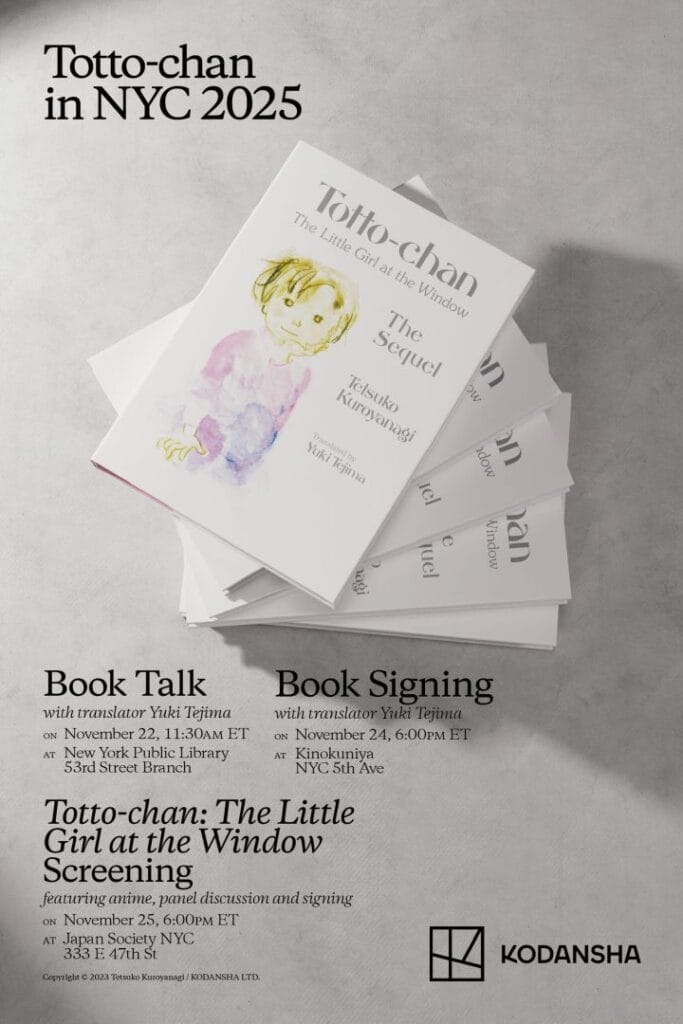
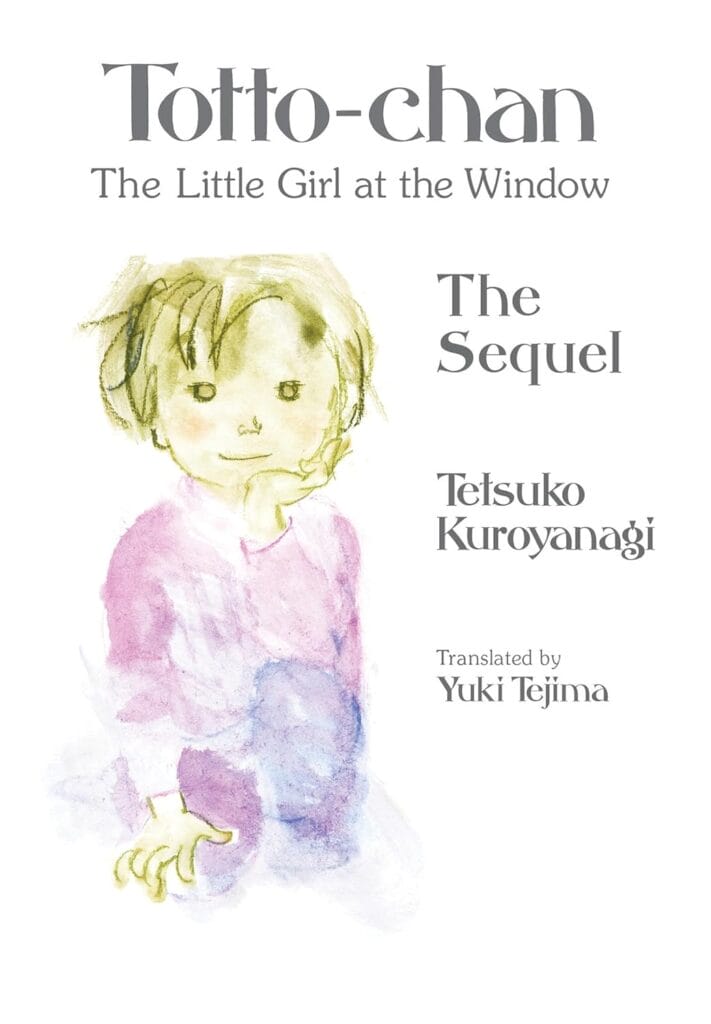
Anime Herald: Tetsuko Kuroyanagi is an absolute legend. She holds a particular place in my coronary heart as a result of we share a birthday (August ninth). How did you react if you discovered you’ll be translating Totto-chan, the Little Lady on the Window: The Sequel?
Yuki Tejima: I discussed above that I couldn’t consider it was taking place, and I keep in mind typing again to my editor that I might like to translate the guide, slowly and punctiliously, one key at a time, as a result of I felt just like the mission may slip via my fingers and vanish if I made one false transfer. I then referred to as my mom and principally screamed. Tetsuko Kuroyanagi is a legend in our family – I grew up listening to how a lot my mom loves her and her work.
Anime Herald: Totto-chan, the Little Lady on the Window: The Sequel will essentially cowl some darkish materials, as a result of the primary character will likely be extra conscious of what’s taking place in Japan. What sort of steerage had been you given when it comes to tone?
Yuki Tejima: My editor was fantastic and inspiring and didn’t “right” me when it comes to tone or voice. I learn and reread the primary Totto-chan guide, hoping to maintain an identical tone – considerate, whimsical, curious, and sincere. I feel the primary guide helped set the tone for me when it comes to translating with sensitivity towards darker subjects such because the warfare. One of many mind-boggling issues about Totto, nonetheless, is how she manages to remain considerate, whimsical, curious, and sincere, even in probably the most devastating moments.
Anime Herald: Tokyo and Los Angeles are vastly totally different cities. What do you’re keen on most about Tokyo? What do you’re keen on most about Los Angeles?
Yuki Tejima: What I really like most about Tokyo is how accessible and punctual every thing is by prepare or bus, versus sitting in LA visitors anytime you need to go anyplace. The sensible bookstores, huge and small, had been how I familiarized myself with Tokyo once I first moved to the town, as they took me to neighborhoods I might by no means learn about in any other case. However the climate… As somebody who grew up in sunny LA, I really feel there are too few days in a single 12 months in Tokyo the place you possibly can stroll outdoors with out having to fret concerning the warmth, rain, humidity, chilly, allergy symptoms, typhoons… the listing goes on. I really like LA for being LA, sunny, brilliant, heat, dry. I take into consideration LA all 12 months lengthy and the way I lengthy to be there once I’m shivering or sweltering in Tokyo.
Anime Herald: Since New York is my metropolis, I’ve to ask: Do you’ve any tales you’ll care to share out of your time dwelling right here?
Yuki Tejima: I really like New York for a similar causes I really like Tokyo – the walkable metropolis, with the ability to pop into bookstores and cafes. However I keep in mind shifting there in my early thirties and beginning my profession over, and in the future being requested by my boss (who was type) to go to Residence Depot and purchase a trash can for the workplace. As I walked up 5th Avenue hugging a trash can, I did surprise the place I used to be going with it precisely. I’ve fantastic recollections of the town too, however I return to moments like that usually in my thoughts.
Anime Herald: Are you able to give an instance of a translated novel the place the interpretation itself impressed you?
Yuki Tejima: Polly Barton’s translation of The Place of Shells by Mai Ishizawa was astonishing. The Akutagawa Prize-winning guide is layered and intentionally sluggish, at instances surreal and tough to understand even in its unique language, and I felt Polly’s beautiful rendition really introduced the novel to life in English. It is vitally literary in the best way that Akutagawa Prize books usually are, not meant to be pushed by plot, however when you’re seeking to sink into your literature and swim round in a sea of prose, this one is a quiet marvel in translation.
Anime Herald: What are some novels which might be accessible in English that you’d advocate our readers take a look at?
Yuki Tejima: There are fairly a couple of Japanese novels in translation now, which means that readers with totally different tastes can discover a guide with which they resonate, with out overlapping with each other. If you wish to know which authors are scorching in Japan proper now, learn Sympathy Tower Tokyo by Rie Qudan (translated by Jesse Kirkwood) or Jackson Alone by Jose Ando (translated by Kalau Almony) popping out early 2026. For mesmerizing storytelling, the Booker-shortlisted Underneath the Eye of the Massive Fowl by Hiromi Kawakami (translated by Asa Yoneda), and for probably the most page-turning novel you’ve ever learn, although tread rigorously as a consequence of violent content material, The Evening of Baba Yaga by Akira Otani (translated by Sam Bett). To start out.

