


Along with all of the articles we’ve revealed, and earlier than correctly transferring onto Spring titles, get pleasure from this prolonged compilation of feedback and quick essays about different works which have impressed us early in 2025. There are some notes about large hits after all, but in addition a take a look at particular moments that elevated reveals, smaller works that nonetheless deserve consideration, and an area for the indie and avant-garde as effectively.
You might have seen that we shared fairly just a few articles right this moment. If the explanation wasn’t clear sufficient, it’s as a result of we initially supposed to publish a single roundup about works of animation that had impressed us throughout the primary months of 2025; principally ones launched this very yr, although as you’ll see later, additionally impartial ones which are much less certain by temporality. After splitting just a few write-ups into self-contained posts, we’re left with a set of final but positively not least notes. Don’t count on these works to be lesser, nor the write-ups essentially much less in-depth. These are merely smaller-scale highlights, be it as a result of they’re shorter works or as a result of particular episode administrators raised the bar far above their present’s norms.
Cocoon is a shocking, Miyazaki-flavored coaching effort… with a darker facet to it
Cocoon is a harrowing quick manga by Machiko Kyou, centered round a gaggle of younger women that parallel the scenario of the Himeyuri college students throughout World Struggle II. Its dream-like high quality, based on the creator’s afterword, has a lot to do with the best way she personally envisioned it: as the kind of hazy nightmare {that a} youngster might need when studying historical past books about wars of the previous. Maybe much more importantly, it’s additionally tied to the central motif of this work and the worldview behind it. Submerged in tragedies of a caliber that no youngster ought to witness, the ladies—particularly its imaginative protagonist named after the Solar—defend themselves from actuality with their companionship and fantasies, which spin a candy cocoon to guard them. However is that going to be sufficient to maintain any of them protected in such an unforgiving scenario? Or, as Kyou succinctly phrases it: can sugar rust metal?
For as attention-grabbing as it’s, Cocoon isn’t a manga I might evenly advocate. Its graphical depictions of dying, dismemberment, hunger, close to sexual assault, and rotting alive of kids aren’t gratuitous within the sense that contrasting them with the candy fantasies is what the sequence is all about, nevertheless it’s nonetheless haunting imagery. Provided that animation undergoes stricter requirements in relation to excessive portrayals, one of many largest questions I had when it was initially introduced was how such a narrative could possibly be conveyed. The truth that the mission could be geared towards mentoring younger animators appeared becoming (virtually too becoming for an animator coaching mission to be about youngsters dropped right into a warzone), however in any other case, how might Cocoon be animated? The reply that its workforce arrived at is, in a means, to movie it from throughout the proverbial cocoon.
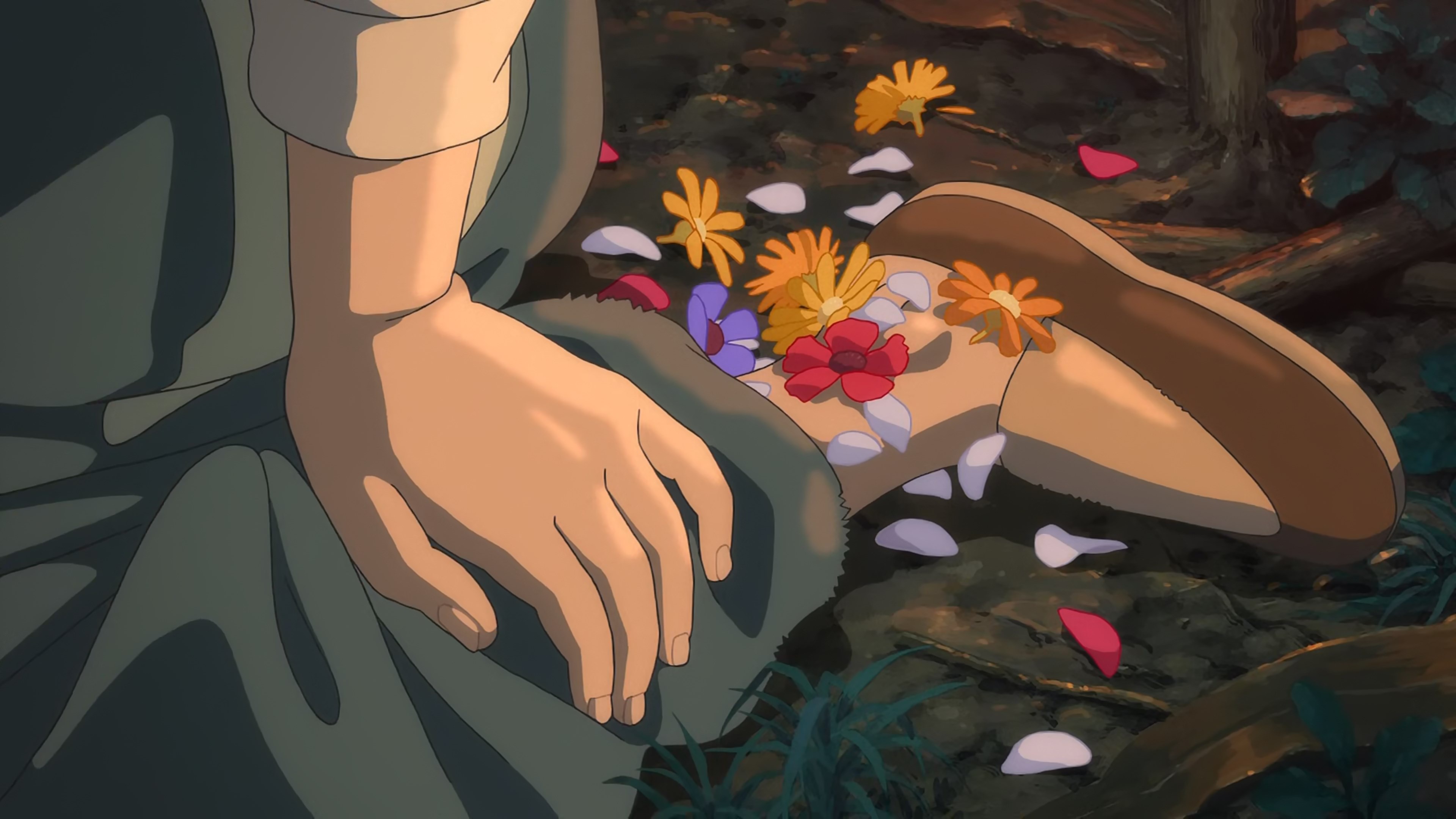 As a substitute of making an attempt a simple adaptation, the Cocoon anime transports the characters right into a barely extra conventional, lengthier character progress story to suit its one-hour runtime. Comparable conditions are reimagined every time they’re thought of notably essential, just like the introduction of the concept of the cocoon on the very starting. Listening to the comparability between the environment of a snowy day and being enveloped by a cocoon, the storyboards make the characters overlap with a cloud that mirrors that concept; the other kind of climate to the one they’re describing, and but a putting look of the central motif on this story.
One facet that stands out simply as quick is the uncanny skill to channel the power of Hayao Miyazaki’s works. We reside in a world obsessive about discovering his successor, the place artists with Ghibli expertise contribute to all kinds of initiatives—together with these made at direct offshoots from the studio, like Ponoc. Cocoon can boast of the same pedigree; artwork directorArtwork Director (美術監督, bijutsu kantoku): The individual accountable for the background artwork for the sequence. They draw many artboards that after authorised by the sequence director function reference for the backgrounds all through the sequence. Coordination throughout the artwork division is a should – setting and colour designers should work collectively to craft a coherent world. and colour designerColour Designer (色彩設定/色彩設計, Shikisai Settei/Shikisai Sekkei): The individual establishing the present’s general palette. Episodes have their very own colour coordinator (色指定, Iroshitei) accountable for supervising and supplying painters with the mannequin sheets that individual outing requires, which they may even make themselves in the event that they’re tones that weren’t already outlined by the colour designer. (Yoichi Watanabe and Nobuko Mizuta, respectively) with Ghibli movies of their resume, ace animators like Shinji Otsuka and Akihiko Yamashita which are inseparable from their works, and most significantly, the truth that it was produced at Sasayuri.
For these unaware, the corporate was based by famend Ghibli douga veteran Hitomi Tateno. After a protracted tenure on the studio, she left behind the stress of manufacturing in favor of one thing she cherished simply as a lot as creating animation: mentoring different artists. She first did it within the inherently laid-back surroundings of a café, and whereas that sadly closed down when the pandemic struck, she’s been capable of comply with it up with the institution of an animation manufacturing division. With it, she will grant real-world expertise to the scholars who endure the Sasayuri coaching course, which has gained a good quantity of notoriety due to her credentials. Promising children have been becoming a member of them and instantly standing out in demanding environments, and the scope of their very own initiatives has been steadily rising. In 2019, they have been aptly appointed to deal with the animation for Natsuzora—a narrative impressed by one other traditionally essential lady in animation, Reiko Okuyama. Over the previous couple of years, they’ve taken issues up a notch and determined to supply their first movie: Cocoon.
Even with that relationship with Ghibli and the entry to extraordinary expertise, each veteran and contemporary, it’s outstanding how effectively they captured the physique language and cadence of a Miyazaki work. Not one of the aforementioned inheritor candidates have ever (not that they have been beneath any obligation to, although they’ve actually tried) managed to imitate the emphatic performing and modulations of the animation that everybody associates with Miyazaki. There’s a way of posing you may discover in his pre-Ghibli work as effectively, that includes a thick Yasuo Otsuka taste. It fixates on the undulations of feelings because the digicam will get nearer to folks’s faces; with that stubbornness towards partial holds it shares with the films that impressed it, which makes the strains really feel continually alive. The timing of the sequences is as recognizable as the person cuts themselves, with a bent to make you maintain your breath earlier than it unleashes crowds like a dam simply exploded. Scenes like the preparation for the primary air raid and this later second of chaos embody these tendencies completely.
 Above all else, it is a mind-blowing achievement from director, storyboarder, animation supervisor, and co-scriptwriter Yukimitsu Ina. He’s nonetheless a younger artist himself, barely just a few years faraway from being mentored in Yukiyo Teramoto’s The Chronicles of Rebecca (2020). And but, regardless of having no actual expertise with this stylistic register apart from his participation within the aforementioned Natsuzora, he confirmed a deep understanding of Miyazaki’s animation tendencies and find out how to use them to evoke highly effective emotions. In the long run, the outcome isn’t as polished as a Ghibli work; it will be unreasonable to count on it to be, given its give attention to the mentorship of kids. It does, nevertheless, really feel like a really becoming angle for Cocoon to take because of the already current hyperlink between Miyazaki’s work and the Struggle. It’s borrowing not only a language however a context, and deploying it in a narrative that at all times employed the distinction between childlike artwork and harrowing occasions. Slightly than Kyou’s harmless doodles, although, the anime makes use of mebachi’s cute designs and that Miyazaki-like bubbliness within the animation.
That distinction is on the core of its most spectacular scene, which ends up in a lot of the college students being killed. In contrast to the manga’s unflinching depictions of massacres, the anime filters them via the fantasies that these youngsters should cling to when actuality is simply that merciless. Slightly than blood splattering throughout, we start seeing dying as fluttering petals— the idealization throughout the cocoon. Nevertheless, it’s not so simple as the anime being a extra starry-eyed model of the story. Its viewpoint additionally emphasizes the transformative facet of the cocoon, giving the protagonist an arc about rising extra resolute moderately than surviving via untainted advantage. This emphasis on change is especially attention-grabbing in relation to her crush; in each variations of a narrative, born a boy to an prosperous household that attempted to dodge being drafted as a soldier via gender shenanigans, which permits additional interpretations in an adaptation about being born anew. In case you imagine you may abdomen these subjects, I might advocate trying out each variations of the story to expertise the noticeably completely different flavors.
Regardless of the widely constructive emotions towards this mission, we couldn’t end this piece with out addressing its nature as a coaching program—and sadly, not from a constructive angle this time. I have to preface this by saying that personally, I’ve heard testimonies about not solely this mission but in addition different Sasayuri endeavors that painted a constructive expertise; specifically, about Tateno herself being accommodating to folks’s private circumstances. I don’t doubt these for a second, provided that they got here from reliable people who had no purpose to misrepresent their very own expertise in that surroundings. Nevertheless, it has turn out to be more and more clear that theirs wasn’t essentially a common feeling.
 That veterans with this Ghibli-adjacent background have excessive requirements is neither shocking nor essentially a foul factor; in actual fact, drilling the basics you wrestle to get elsewhere within the trade is the purpose of this effort to protect conventional method. That mentioned, good intentions don’t excuse in any means that they’d harass college students in the best way a sure animator reported at size. In line with the individual in query, verbal abuse and fully out-of-line accusations of psychological sickness could be hurled round often. As they speculate, this is able to be meant to demoralize and eliminate the scholars who couldn’t hit the bottom working instantly, so they might give attention to the extra technically succesful ones. Because the dialogue gained traction, different reliable voices within the trade didn’t hesitate to share comparable accusations.
It’s value noting that the anecdote that sparked all the things specifies that they have been a part of a studio that outsourced their douga coaching program to Sasayuri; a deal that they’ve established with the likes of WIT and BONES, and that instantly obtained muddied by the intervention of firms like Netflix who’d sponsor it however including questionable exclusivity clauses. It’s solely doable that this hole in experiences with Sasayuri comes down not simply to technical ability as judged by the mentors, but in addition as to if it is without doubt one of the firm’s personal initiatives or these work-for-hire alternatives.
Regardless, the conclusion is identical: it’s by no means sufficient to behave the precise means typically, even more often than not. Even when your aim is noble, it’s not value traumatizing younger prospects to the purpose the place they don’t really feel like drawing anymore. Ghibli themselves at all times forged, for a corporation that stood heads and shoulders above the practices of the trade as an entire, a darkish shadow protecting these artists who have been crushed by their excessive requirements. And if it’s already extreme to deal with veterans in a sure means, it’s much more unacceptable to do it to college students contemporary out of college. Cocoon is a beautiful movie that preserves endangered methods, utilizing them to depict children who should disguise themselves from soul-crushing realities to attempt to survive. As viewers, although, we must face not simply its magnificence however the uncomfortable actuality round it.
Honey Lemon Soda and Kiyotaka Ohata’s maddening brilliance
It’s exhausting to convey to youthful viewers, for whom JC Employees is generally a ruthless manufacturing unit line outputting a dozen works a yr, that it as soon as was one of the crucial vibrant areas in anime. And it’s much more sophisticated to get them to know that this hasn’t concerned driving away the standout expertise from that period; many people who started shining alongside the likes of Kunihiko Ikuhara stay on the studio, entrusted with essential roles as effectively. Sadly, the manufacturing system has warped your entire firm and what these excessive accountability roles entail. Shinya Hasegawa is as a lot of a legend as he ever was, however when his job is generally to make sure that the drawings in typically rushed productions are ok, features just like the energetic performing he was recognized for turn out to be much less prevalent. Some veterans don’t adapt effectively to the turning tides of the trade, whereas others merely resolve to cease going overboard in the best way you will need to if you wish to shine in anime. General, nevertheless, the difficulty with JC Employees’s seemingly timid veterans is clearly systemic.
 Few instances illustrate that higher than Hiroshi Nishikiori, a drastically underrated director. Maybe due to his adjacency to the celebs of the caliber of Mamoru Hosoda or Ikuni himself in initiatives like Utena, he’s taken with no consideration and assumed to be a lesser contributor to such monumental works. And but, these famend creators are fast to reward his environment friendly ingenuity. Between the late 90s and early 00s specifically, Nishikiori was merely on a roll. He was the chief of hits like Azumanga Daioh, in addition to an occasional (but typically a standout) contributor to different titles emblematic of that point like Orphen and Alien 9. No work sums up his effortlessly evocative imagery, quirky humor you may hint again to Junichi Sato, and the nets of relationships that sustained this post-Utena golden age higher than Tenshi ni Narumon. As his sequence route debut, for an authentic mission at that, it’s probably the most undiluted showcase of Nishikiori’s attraction as a director—and of that complete period altogether, because the likes of Hosoda confirmed as much as assist. Typically, with fairly a curious crew forming round it.
The spark from that point is sorely lacking in Nishikiori’s trendy output. Once more, that principally appears to return all the way down to the trade and his house studio creating a unique kind of labor at a unique tempo; be happy to interchange that adjective with one other, extra damaging phrase your self. Even on this much less favorable state of affairs, you may nonetheless get glimpses of that environment friendly appeal from time to time. Simply final yr, he was entrusted with following up the grandest episode of Dandadan, which he completed with a humorous sufficient storyboardStoryboard (絵コンテ, ekonte): The blueprints of animation. A sequence of often easy drawings serving as anime’s visible script, drawn on particular sheets with fields for the animation reduce quantity, notes for the workers and the matching strains of dialogue. that you simply wouldn’t cease to query the notably decrease manufacturing values. It’s additionally value declaring that at no level has he turn out to be a dangerous director. The ceiling of Nishikiori’s titles is actually decrease these days, however the flooring stays sturdy for so long as he’s not instructed to construct a home on prime of quicksand. In a means, that sums up that systemic JC Employees deterioration: very expert veterans should be deployed for his or her reliability moderately than their brilliance.
Why convey that up now, although? Properly, 2025 began with an adaptation of Honey Lemon Soda led by Nishikiori which is… once more, precisely tremendous. Whereas I wouldn’t ask folks to exit of their technique to watch the anime in the event that they’re not already , it’s a cute sufficient sequence about love as a vector of self-improvement and connection. His personal episodes stand out considerably due to the spacious camerawork; though it typically calls for the kind of difficult drawing {that a} modest manufacturing like this struggles with, it additionally permits the sequence to attract a transparent bridge between bodily and emotional distance. Even with out the sequence directorSequence Director: (監督, kantoku): The individual accountable for your entire manufacturing, each as a inventive decision-maker and ultimate supervisor. They outrank the remainder of the workers and in the end have the final phrase. Sequence with completely different ranges of administrators do exist nevertheless – Chief Director, Assistant Director, Sequence Episode Director, all kinds of non-standard roles. The hierarchy in these situations is a case by case state of affairs. swinging for the fences like he as soon as did, these fundamentals can maintain the kind of mission that may have fallen aside on the seams in any other case.
Rather than the sequence directorSequence Director: (監督, kantoku): The individual accountable for your entire manufacturing, each as a inventive decision-maker and ultimate supervisor. They outrank the remainder of the workers and in the end have the final phrase. Sequence with completely different ranges of administrators do exist nevertheless – Chief Director, Assistant Director, Sequence Episode Director, all kinds of non-standard roles. The hierarchy in these situations is a case by case state of affairs., the people who can funnel ambition to productions like this are typically the storyboarders and episode administrators. #05 reveals as a lot, as boarded by one other JC Employees veteran from the identical circle in Yoshiki Yamakawa; its increased diploma of abstraction makes the every day life bits extra evocative and even conduces to extra playful animation. Nevertheless, if there’s somebody who takes their episodes to a degree the place they deserve a broad suggestion (particularly to folks with a style for 90s anime), that’s no doubt Kiyotaka Ohata. At his finest, he had been Nishikiori’s biggest ally—each in amount and high quality of their work collectively. From the best episodes of Azumanga and different highlights like its iconic opening to these extra idiosyncratic, private initiatives like Tenshi ni Narumon; Ohata was at all times there, and he at all times delivered.
 In distinction to administrators from comparable circles who use repetition to ascertain a poetic cadence, Ohata employs it like enjoyable percussion that sweeps you alongside. Repeating loops of animation, of surreal patterns and actions, of typography and colourful voids the place everybody casts vibrant shadows. He’s in his factor when the rhythm is excessive, and if a present isn’t cautious sufficient, he would possibly drag it in that route along with his aggressive framing. An strategy with such a powerful style that it received’t swimsuit everybody, but one so distinct I’d miss even when I wasn’t a fan. Sadly, he has undergone an evolution just like his pal Nishikiori. Slightly than transitioning right into a tamer sequence directorSequence Director: (監督, kantoku): The individual accountable for your entire manufacturing, each as a inventive decision-maker and ultimate supervisor. They outrank the remainder of the workers and in the end have the final phrase. Sequence with completely different ranges of administrators do exist nevertheless – Chief Director, Assistant Director, Sequence Episode Director, all kinds of non-standard roles. The hierarchy in these situations is a case by case state of affairs. (his experiences in that seat might have gone higher), he has turn out to be a storyboarder by commerce, lessening his involvement and never even placing himself able to push boundaries like he as soon as did. His occasional openings are recognizable to at the present time—even a 3D present can appear like Azumanga’s sibling for a second—however in any other case, that period of Ohata has principally light away.
There’s a straightforward technique to illustrate his present scenario: over the past decade, he’s solely been in an place of management of an episode because the storyboarder and director 6 instances. The upside to that assertion, although, is that two of them have been exactly in Honey Lemon Soda. His first scene in episode #06 is a press release of all of the qualities we’ve summarized. There’s the evocative storyboarding, with the transition from a slim window that traps the protagonist to a airplane flying the open skies; the previous, a illustration of her timid life thus far, the latter, of her need to achieve new locations now that she’s reinvigorated by her love. The strong colour silhouettes are straight out of his intros, and the rhythmic repetition (leap cuts, continually overlapping panels) is by some means much more consultant of Ohata’s type.
Regardless of his rowdiness, Ohata’s strategy proves to be moderately atmospheric as effectively. His percussion can decelerate simply sufficient to ascertain a laid-back but nonetheless energetic rhythm, the place each posing and voice performing synchronize so as to add to the musicality. The motifs (like visitors indicators associated to that non-public progress) and recurring layoutsLayouts (レイアウト): The drawings the place animation is definitely born; they develop the often easy visible concepts from the storyboard into the precise skeleton of animation, detailing each the work of the important thing animator and the background artists. give it a equally rhyming construction on the macro degree, which underlines how her group of mates is increasing in a pure means. And every time he can get away with it, the comedic animation bodily drags you just a few a long time again. Amusing multiplicity, a dance between completely different ranges of artifice, and sensible repurposing of the motifs he himself launched. After an episode the place the protagonist basks within the gentle for the primary time, the second when she’s knocked down brings her to darker locations that solely her love curiosity can appear to light up. Of all issues, it’s the airplane that represented her resolve that covers the solar after which flies away… with the proper timing to make her seem just like the dazzling one.
Ohata’s subsequent look in episode #11 begins with equally recognizable rhythm and guidelines of cartooning; taking the latter even additional this time, as he finds methods to insert typography and VFX with the complete vary of diegetic to proudly synthetic. A few new wrinkles make it much more particular, beginning with the truth that one of many biggest animators of all time makes a number of visitor appearances. Takeshi Honda had taken the world without warning by exhibiting his face (scarcely seen in TV anime these days) within the opening, however even then, nobody would have anticipated one of the crucial famend figures in theatrical animation to descend upon the present itself. The pure flutter of the material alone in mere follow pictures are sufficient to inform that he’s a unique breed altogether.
The second purpose why this episode lands with much more affect is that it’s maybe probably the most satisfying growth within the relationship you’ve seen progress for practically a whole cours. Honey Lemon Soda had been gesturing within the route of a extra even and reciprocal bond between its two leads, nevertheless it’s not till episode #11 that—via Ohata’s maddening sugar excessive—you see that materializing in barely surreal, very cute methods. This culminates in one other assembly between Honda’s unmatched kind and Ohata’s flavorful route; and in addition, a gathering between two highschoolers who’ve demonstrated they each might be relied upon. Whereas the context makes moments like this significantly better, Ohata’s work within the present is sweet sufficient that I’d implore anybody to tune in for on the very least these two episodes. In case you have been into any of the works we talked about earlier, or 90s to early 00s anime in any respect, it’ll be like assembly an expensive outdated pal.
I had heard Tokio Igarashi was good, and Zenshuu #07 actually confirmed that he’s
From the other angle to rediscovering glorious veteran creators, there’s the equally rewarding feeling of discovering out why an up-and-coming artist had been incomes a constructive popularity. It’s not as if I hadn’t ever seen the work of Tokio Igarashi earlier than—most notably, he’d participated within the second season of Vinland Saga, which I discovered to be much more highly effective than its predecessor. Regardless of having crossed paths earlier than, although, it had by no means been significant sufficient for his enter to register in my thoughts; it’s value noting that he has solely lately began drawing his personal storyboards, regardless of having credit for cleansing up different folks’s since round 2022.
Come 2025, I’ve lastly had an opportunity to expertise one thing that feels prefer it really is an Igarashi episode. His contributions to Zenshuu arrived in the course of the again finish of the present, however later positively doesn’t imply lesser on this case. Episode #07, which he directed and storyboarded, addresses key areas the place the sequence had been missing earlier than. Most significantly, it does so in a compelling sufficient means that you simply’re not left feeling like they put a hasty band help over an open wound. To place it in additional particular phrases: Igarashi’s supply manages to humanize Zenshuu’s protagonist Natsuko Hirose, depicting a sequence of vignettes of the intersections between her life and those that have been touched by it.
Zenshuu‘s core workers additionally options some creators we’ve been speaking about for the final decade. There’s sequence directorSequence Director: (監督, kantoku): The individual accountable for your entire manufacturing, each as a inventive decision-maker and ultimate supervisor. They outrank the remainder of the workers and in the end have the final phrase. Sequence with completely different ranges of administrators do exist nevertheless – Chief Director, Assistant Director, Sequence Episode Director, all kinds of non-standard roles. The hierarchy in these situations is a case by case state of affairs. Mitsue Yamazaki and her recurring assistant Sumie Noro, author Kimiko Ueno, and naturally everybody’s favourite designer Kayoko Ishikawa. In case you thought we wouldn’t take this opportunity to share her iconic Aikatsu endings once more, you’re so very improper. The choice would have been to cry about one among her buried initiatives along with her pal Sayo Yamamoto as an alternative.
After all, it’s not as if tales have an obligation to characteristic universally likable leads. We’re additionally not coping with a case of a protagonist with no basically compelling battle; the inventive block and expectations she leaves behind within the first episode are a strong place to begin… nevertheless, she does certainly depart them behind, with the present solely often with the ability to underline how her present isekai life spells out a solution. With out a lot chemistry between her and the brand new forged both, you’re caught with a protagonist that’s offered as neither all that gratifying to hang around with nor pointed in her distancing from others. That’s, till episode #07 arrives, exhibiting that she did have a charismatic creator character at her core—one which explains why folks gathered round her to create animation (and now, to save lots of the world) higher than her technical ability and fame do.
Every state of affairs showcases a barely completely different facet of her character, as she grows up chasing her dream to turn out to be a virtuoso animator. Certain, she stays self-absorbed in a means that makes her present self nonetheless recognizably the identical, however we see why Natsuko was such a magnetic particular person as effectively. Once more, it’s not as a result of she’s good at drawing—the present already tried to convey that earlier than—however moderately via her real, centered ardour that touches others. The old flame framing of its quick tales provides to the inherent comedy of most of them, however don’t get that confused with an extra of irony; if something, the episode shines in the best way Igarashi’s route unashamedly embraces the romanticized viewpoint that she shares with these drawn into her life. The second specifically stands out, successfully working like the kind of sincere, uncomplicated romantic quick movie that resonates all the identical. There’s one thing to be mentioned about storyboarding that proves to be imaginative and its framing and bold within the method it calls for, however so blunt in its emotional attraction.
One other facet that stood out is the upper diploma of refinement of the animation, which isn’t a high quality that you simply naturally get out of a manufacturing system like MAPPA’s. They’ve a rare skill to draw expertise able to outputting flashy work and have grown to a dimension that makes them capable of end work beneath any circumstances (not that Zenshuu itself was beneath such duress), however polish can’t be taken with no consideration when all of the common animation routeAnimation Route (作画監督, sakuga kantoku): The artists supervising the standard and consistency of the animation itself. They could right cuts that deviate from the designs an excessive amount of if they see it match, however their job is generally to make sure the movement is as much as par whereas not wanting too tough. Loads of specialised Animation Route roles exist – mecha, results, creatures, all centered in a single explicit recurring factor. is sprinkled throughout dodgy SEA assist firms. There’s little doubt that a lot of it comes all the way down to the chief supervisors and their assistants—Masahiko Komino and Shuji Takahara on prime of the common Kazuko Hayakawa and Ishikawa herself—who actually really feel cherry-picked for an episode meant to be essential. Moreover, that subtler high quality typically trickles all the way down to even the in-betweening; overseen by one of many workforce’s extra reliable people, and with credit structured in a means that makes me marvel in the event that they opted for extra dependable paper douga in delicate spots.
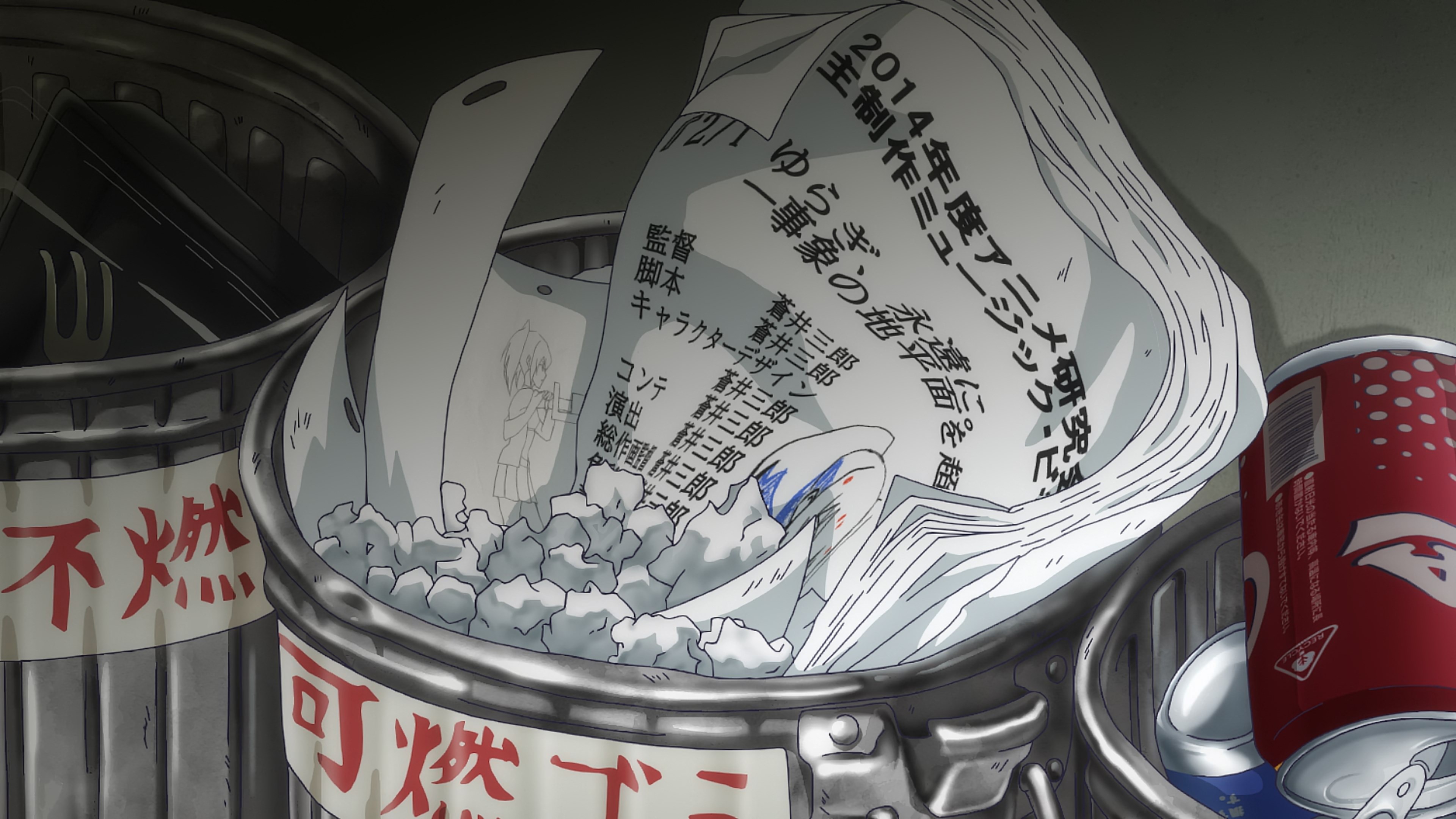 Whichever trick there was between the extra cautious drawings managed, because of clear prioritization as effectively, to make the outcome really feel way more palpable. That is an all-encompassing high quality, which aids even its comedic scenes; you may solely land a gag the place somebody’s shock is matched to their ageing and carrying if you may make the drawings themselves an in depth embodiment of that concept. The impact of the delicacy within the expressions goes with out saying, and simply as essential is the best way that your entire theme of the work feels finest represented. Despite the fact that Natsuko’s animation processes aren’t made made as grand as within the inventory footage, the tactility every time a shot is devoted to the drawing course of and the hassle behind it feels realer than ever earlier than.
Igarashi would later return with a storyboardStoryboard (絵コンテ, ekonte): The blueprints of animation. A sequence of often easy drawings serving as anime’s visible script, drawn on particular sheets with fields for the animation reduce quantity, notes for the workers and the matching strains of dialogue. for episode #09, this time beneath Sumie Noro’s route. Its first half feels just like the epilogue to #07; yet one more vignette of somebody crossing paths with Natsuko and witnessing the humanity hidden behind lots of hair and grumpiness, which is sufficient to depart a heart-shaped mark of their life. In the long run, nevertheless, it doesn’t really feel like a special day like Igarashi’s earlier providing—it’s not designed to be within the first place, as a storyboard-only job for him and a extra rudimentary story beat. It was daring for the present to position such a load-bearing episode as late because it did, and I’m not solely positive that it was one of the best choice. What I do know, although, is that in and of itself it was an cute technique to specific the message that love is obligatory for the inventive course of. I’m blissful that I obtained to observe such a candy episode by a director I now know to maintain my eyes on.
The obligatory plea for folks to observe extra impartial, various animation
I received’t be shocking anybody by noting that most individuals restrict their view of anime and animation altogether to business works. Whereas the convenience of sharing movies on-line has made it more likely for others to encounter music movies, pupil commencement initiatives, and all kinds of quick movies, these are however a fraction of the wealthy spectrum of non-commercial and impartial animation. Many gorgeous, deeply resonating works are screened throughout worldwide movie festivals but by no means shared in platforms that everybody has entry to. There’s no understanding why viewers gravitate so strongly towards business works with out accepting this reality.
For as uncomfortable because it makes some folks to even contemplate the concept, there is some upside to that barrier of entry. To place it merely, we have a tendency to interact with artwork that we search proactively in a extra concerned means than these works which are so closely promoted and entrenched in tradition that we eat them virtually passively; that’s the second when creations turn out to be the dreaded phrase, content material. Whereas I can perceive that standpoint from a philosophical standpoint, nevertheless, I can’t subscribe to it as somebody who enjoys sharing attention-grabbing works—and as somebody who enjoys with the ability to watch them, for that matter.
Let’s put some names to this. Koji Yamamura is without doubt one of the most essential figures in impartial animation historical past, and but I haven’t discovered an opportunity to observe his mix of prose and animation by the title of Extraordinarily Brief but. Due to scheduling conflicts, in current movie festivals I’ve managed to overlook it alongside First Line; technically a part of a TOHO initiative but following the choice animation circuit, this quick movie by pal of the positioning China examines the act of making animation itself. The identical occurred with Yoriko Mizushiri’s Peculiar Life, winner of a Silver Bear prize on the Berlinale 2025. Even in the event you take note of animation under its business floor, it’s not at all times simple to catch even probably the most famend various choices.
Thoughts you, this isn’t meant to be a discouraging story in regards to the unbelievable effort required to observe indie animation—it’s the other, moderately. There’s no denying that spotty distribution could make these titles extra troublesome to entry. Due to their irregular launch patterns, they’re additionally stripped out of the window of public relevance awarded to business anime. And but, their nature additionally makes them extra liable to discoveries that really feel private. For all we’ve highlighted their restricted availability, they’ll typically get shared in quieter corners which are typically only one search away.
This may be illustrated by returning to the earlier anecdote: one other quick movie I believed I had missed at an area competition was Nana Kawabata’s The Level of Permanence. Its trailer had caught my consideration, and a little bit of analysis indicated that I wasn’t alone; she’s been capable of share morphing landscapes that really feel like a deity peeking into humanity not simply via plain animation, however in reveals, installations, and books as effectively. Whereas lamenting that I’d missed an opportunity to observe her work, I appeared it up yet another time and seen two issues: one, that she’d been nominated for the Asia Digital Award FUKUOKA, and two, that the positioning to showcase the winners options the precise works. Stumbling upon a channel that will get nearly a dozen views whereas sharing gems which have restricted availability is the kind of rewarding expertise you may get out of other animation, in the event you put only a little bit of curiosity into it. Don’t be scared to offer it a attempt!
Was Kawabata’s work well worth the pleasure, although? The reply is obvious. The Level of Permanence challenges itself to concurrently inform the story of the cells that compose a residing being, of 1 particular person, and of humanity as an entire. The strains between them are blurred; or moderately, weren’t they hazy within the first place? In any respect ranges, we arrange ourselves in a equally orderly style, requiring coordinated repetitive motion for our collective progress. It’s no shock, then, that the smallest items inside our our bodies appear to have human silhouettes of their very own—stylized into universally recognizable stickman figures. They pulsate endlessly, as they navigate techniques which are harking back to each tiny snapshots of biology and historical past at giant. The awe of life is delivered by instinctively satisfying visuals as clearly as its preoccupations about it turn out to be sound, rising extra uncomfortable as all the things expands and overlaps.
This quick movie’s triumphs are many and never notably delicate. Above all else, Kawabata’s work impresses in the best way it may possibly stretch the very same idea for barely over 10 minutes. The enchanting morphing animation that had already caught my eye in trailers is what stored me glued to the display for its complete runtime, continually discovering methods to iterate on that seemingly infinite cycle. In that development, you discover its skill to evoke scale and enlargement; regardless of having no goal level of reference, and with drawings that already start with a excessive diploma of density, it nonetheless feels prefer it takes us from the microscopic to the infinite.
In the long run, Kawabata doesn’t appear to interpret this everlasting progress that we’ve traditionally sought (a organic tendency, given the parallels she attracts?) as liberating, nevertheless. After a lot development, growth, and will increase in complexity, the cell of humanity that felt so huge slowly fades into the space. From this nonetheless standpoint, it’s truly turning into smaller, trapped into an more and more tiny dot that it may possibly’t escape from—the purpose of permanence.
Simply by trying out just a few extra choices from these current awards, one can discover just a few extra attention-grabbing works; amusingly, that features one with very comparable traits to The Level of Permanence. HuaXu Yang’s Skinny World too attracts parallels between the human physique and society, particularly to cities, as two meticulously organized techniques of features. Regardless of the advanced imagery that provides kind to these concepts, he’s capable of evoke by subtraction and implication as effectively. This course of ends in a surprisingly amiable, surreal panorama that may depart you questioning if our society is merely replicating animalistic, fleshy behaviors. And in the event you’re not into one of these arthouse efforts that talk to the senses above all else, you may swing the opposite means round to Li Shuqin’s To the Moon and Again: an uncomplicated, sincere story about processing grief at a degree the place you don’t fairly know that feeling; solely its ache, contemporary and new.
It’s no shock that many tales about loss are framed from the eyes of a kid. It’s not merely as a consequence of these experiences being those that follow us in the long term, but in addition as a result of the shortage of preconceptions about dying permit us to discover it with out the luggage that we inevitably accumulate later in life. It’s a imaginative and prescient of loss that doesn’t get diluted in ideas about repercussions that we could not perceive. And but, it’s additionally materially tied to parts of that small world that surrounds us once we’re younger, like a tadpole that we could have raised. What stood out probably the most about this quick movie was the inventive option to retain seen remnants of the earlier body when transferring to the subsequent one—an try and seize a sense akin to paint-on-glass animation, which can be harking back to the marks left by the lives which have left us. Though not strictly autobiographical, it’s a really private quick movie in a means that will get throughout clearly to the viewer.
If we began this nook by acknowledging the boundaries of entry to impartial animation on a fabric degree, I need to let To the Moon and Again serve for example that the concept they’re inaccessible as artwork is foolish. Inscrutable arthouse items do exist, and they are often a superb technique to free your self from dogmatic beliefs about what storytelling needs to be like; and whether or not it’s even obligatory to inform a narrative for artwork to be poignant, for that matter. However on the similar time, many of those impartial quick movies are easy, private tales that resonate via honesty, that turn out to be memorable by selecting uniquely becoming types and methods that business animation could be afraid of. So depart these fears behind your self and comply with artists, keep watch over festivals and specialised websites, or I don’t know, comply with vtubers with a very good eye for indie people. That helps too.
Did you assume these have been all of the animated works that stood out to us? After all not
- Kusuriya no Hitorigoto / The Apothecary Diaries is basically nice in ways in which ought to shock nobody now that we’re midway via its second season. The supply materials lures you in with a captivating forged, whose antics and episodic mysteries are later used to assemble overarching puzzles. Though the scriptwriting must be a bit extra assured in spots—the dialogue typically goes out of its technique to reiterate clues—the precise plotting is daring and at all times very satisfying looking back. Our protection of the primary season highlighted these qualities, in addition to the understated system of success they constructed for all administrators to shine. Though that continues to be true, reckless scheduling has caught as much as it; a much less excessive case than the problems My Comfortable Marriage has gone via, although comparable in nature. Their makes an attempt to clean over the troublesome schedule by dragging in a succesful studio like C-Station to supply one in three episodes previous a sure level led to notable outcomes at first, but progressively much less constant as they too obtained caught in a cycle of crunch. Please give them props although, they’ve carried out extra for the sequence than the credit convey! Nice present, strong workforce, considerably held again by inexcusable planning.
- As many different folks, Hunter x Hunter 2011 was the TV sequence that helped me uncover Yoshihiro Kanno’s animation. Ever since then, I’ve been following his profession on and off, even in the sorts of reveals that you simply wouldn’t count on from his popularity. For as a lot as I encourage everybody to broaden their understanding of artists, although, there’s no denying that Kanno shines finest in motion anime. His timing is forceful, however particularly when he’s storyboarding as effectively, his setpieces have palpable stream. He tends to overwhelm the display via 2DFX and particles overload akin to the work Nozomu Abe, regardless of their stylizations being nothing alike. For starters, moderately than aiming for Abe’s extra picturesque sense of awe, Kanno makes use of these results to point features like directionality; each in an goal means (the place do the blows come from?) and subjective ones (how can we use parts just like the route of the rain to point an influence imbalance?). That is all to say that I’m glad Solo Leveling followers appear to have realized how fortunate they’re to have him as an motion director, as a result of he deserves all of the flowers.
- Though I used to be reluctant to get round to the third season of Re:Zero when it initially started its broadcast for causes that now go with out saying, I lastly binged it in time to observe the ultimate episodes as they aired. The sequence is in no place to compete with the seamless, immersive high quality of the primary season’s manufacturing, and having changed sequence directorSequence Director: (監督, kantoku): The individual accountable for your entire manufacturing, each as a inventive decision-maker and ultimate supervisor. They outrank the remainder of the workers and in the end have the final phrase. Sequence with completely different ranges of administrators do exist nevertheless – Chief Director, Assistant Director, Sequence Episode Director, all kinds of non-standard roles. The hierarchy in these situations is a case by case state of affairs. Masaharu Watanabe additionally makes it wrestle to achieve the identical heights of catharsis for its character beats—he operated on a unique degree of ambition. Though this ends in a little bit of a lesser season, I wouldn’t level on the new workforce (particularly not with Haruka Sagawa as the brand new designer) a lot because the arc itself being inherently much less resonating; moderately clearly so when its grand speech echoes one which carried extra weight. It’s, nevertheless, constantly entertaining to see each volcanic character in its world locked inside the identical metropolis after an exposition-heavy season. Whereas Vincent Chansard’s transcendental draftsmanship understandably obtained probably the most applause, I’d level to Hamil’s fixed appearances and the Archbishop of Lust’s morphing animation because the MVPs. The sequences the place she unnaturally regenerates her physique will not be solely technically spectacular, however as disagreeable as she must be.
- Whereas I didn’t get round to ending the present, shout out to Shin Itagaki for his work on Okitsura. I’m not precisely shocked that his popularity amongst individuals who aren’t actually within the know (or at the very least conscious of his full resume) doesn’t match his skill, and a surprisingly crafted piece of Okinawa propaganda actually received’t change that. All that mentioned, I’m at all times blissful to understand his work; the circumstances that encompass him, although, not a lot. His Teekyuu tenure proved that he might take the snappy timing that characterised his animation to the intense, utilizing posing alone to create a cheap masterpiece. Nevertheless, his eccentric artist blood has continually pushed him in different instructions. Even with out citing probably the most controversial mission he was tied to, reveals like Kumo desu ga, Nani ka? showcased the kind of volumetric ambition {that a} workforce like theirs merely couldn’t aspire to with out crumbling… which is strictly what occurred. Okitsura feels virtually like a solution to that: often constructed upon intricate character arc and daring framing, however prepared to abbreviate the motion in classically Itagaki methods. In a number of methods, a romcom not fairly like anything.
- SK8 Additional Half was lastly launched some time again, residing as much as the promise of enjoyable vignettes for the forged. Separated from the primary season’s overarching narrative (although hinting on the route that the sequel’s plot will doubtless take), these every day life moments vary from worthy of a chuckle to very cute. Whereas the ridiculous power of the unique present was its biggest asset, this OVA proves that some relationships have charming sufficient chemistry to nonetheless work in a extra low-key scenario. Right here’s hoping that season 2 lives as much as its predecessors, and that Hiroko Utsumi’s mates can present up like they did right here.
- In case you’ve been having fun with the mix of Gosho Aoyama‘s work with irreverent, Kanada-leaning animation in YAIBA, I’d strongly advocate watching episode #1155 of Detective Conan. Don’t let that giant quantity scare you: it’s an authentic, ridiculous gag episode constructed solely across the type of Hiroaki Takagi. Neither he nor the ex-Wanpack artists he surrounds himself with are newcomers to the sequence, however they hardly ever can go on a rampage with all limiters off in the best way they did. The likes of Toshiyuki Sato appeared in the identical means they’re doing for YAIBA; unsurprisingly, provided that they each provide the likelihood to have enjoyable with pose-centric, unfastened animation. Convergent evolution inside Aoyama sequence, I suppose. A very good sort!
- Otona Precure—a sequence of spinoffs for the franchise each aimed and that includes adults—has been a combined experiment. For its plain points, starting from sure Precure tropes feeling extraneous on this context to a subpar manufacturing, the 2023 sequence Kibou no Chikara was bold in addition to indignant in amusing methods. Whereas I can’t say the identical factor about Mirai Days, because it was a extra simple sequel to Mahoutsukai Precure with out a lot to state, it allowed Yuu Yoshiyama to go extra ballistic than ever within the franchise. Because the lead animator with a hand in each single spotlight, be it from intervening in each step of the method to turning into a hyperlink with very attention-grabbing visitor animators, Yoshiyama elevated Mirai Days’ expertise means above what you’d count on from it on paper. What would occur if the Precure grew older? Kibou no Chikara’s reply was about time, the modifications in our planet, and grownup preoccupations. Yoshiyama delivers a extra simple reply: they’d punch rattling exhausting, as a result of magical women are cool as hell typically.
- Since we revealed a prolonged piece about Kenji Nakamura’s complete profession not way back, I didn’t really feel the necessity to discuss in regards to the Mononoke motion pictures once more; particularly not provided that they’re meant to be a trilogy which is but to be accomplished. That mentioned, the second movie led by Nakamura and his right-hand man Kiyotaka Suzuki was lately launched in theaters, so I merely need to subject the periodic reminder that you need to try the sequence. As distinctive as business anime will get, and by evaluating every occasion of it, a captivating illustration of Nakamura’s fixed evolution.
This has been fairly the multi-part marathon about animation we revealed right this moment, so we’ll be wrapping up right here. And bear in mind, if a piece that resonated with you strongly wasn’t talked about right here, that should be thought of a private assault that invalidates you and the character you wrote round a chunk of fiction. Or maybe that’s not the way it works and fandom areas are toxic, who can inform! For as many issues we attempt to hold observe of with a moderately omnivorous weight loss program, it’s not possible to observe all the things—and it will merely be disingenuous to faux curiosity in works that haven’t piqued our curiosity.
As at all times although, be happy to ask about anything… until it’s a few sure well-known fighter who lately grew to become a child (once more) or a gaggle of dramatic women who confused bands for therapists, since there are already drafts written for these. I didn’t go insane watching Ave Mujica simply to bottle up these emotions, even when that may be very in-character for the sequence.
I do know I mentioned I would depart the raving about Ave Mujica for one more day, however are you able to imagine that one of many excellent music movies they launched throughout its broadcast was produced by Saho Nanjo’s common workforce? That includes the likes of Setsuka Kawahara accountable for the watercolor and sand animation, Haruka Teramoto accountable for the CG and photogrammetry, Kana Shmizu for its photomontages of nightmarish longing arms. Just some months in the past, I pointed at them as one among my coolest creator discoveries in current instances, and right here they’re within the (thus far) sequence I’ve loved probably the most in 2025. Nanjo & co have the novel edge (and unconventional decisions of method) you’d affiliate with avant-garde animation, but in addition the flexibility to adapt and seize particular moots that makes them a viable possibility for business, narrative works. They sublimated the band’s gothic aesthetic and the truth that these women are sometimes extra emotion than individual into an unbelievable expressionistic work of animation.
Assist us on Patreon to assist us attain our new aim to maintain the animation archive at Sakugabooru, SakugaSakuga (作画): Technically drawing footage however extra particularly animation. Western followers have lengthy since appropriated the phrase to consult with situations of notably good animation, in the identical means {that a} subset of Japanese followers do. Fairly integral to our websites’ model. Video on Youtube, in addition to this SakugaSakuga (作画): Technically drawing footage however extra particularly animation. Western followers have lengthy since appropriated the phrase to consult with situations of notably good animation, in the identical means {that a} subset of Japanese followers do. Fairly integral to our websites’ model. Weblog. Because of everybody who’s helped out thus far!


