


Content material Warning: This text accommodates dialogue of ableism and incapacity discrimination
This text accommodates Spoilers for Witch Hat Atelier (as much as Quantity 13)
Witch Hat Atelier by Kamome Shirahama has been broadly praised for its illustration of disabled and chronically unwell folks, together with a bunch that the fantasy style usually leaves out or treats with cliches. Incapacity is very seen on this solid of characters and accessibility gear has been fastidiously folded into the worldbuilding, from enchanted eyeglasses to magical mobility aids that carry their customers round on goat legs. Nonetheless, the world of Witch Hat is on no account a utopia, and Shirahama’s narrative goes to nice lengths to discover the methods through which disabled characters are excluded and additional deprived by components comparable to social class, wealth, sexuality, or being in any other case marginalised—reflecting actual world points even within the context of a magical secondary setting.
The collection applies the social mannequin of incapacity, a principle that persons are solely disabled by the society through which they stay. For instance, wheelchair customers are solely disabled when buildings would not have entry comparable to ramps, working lifts, and accessible bathrooms. The social mannequin of incapacity proposes that the limitations disabled folks face are solely created by these in energy, and by the socio-cultural attitudes of these round them. This additionally implies that class and wealth play a major position in folks’s expertise with incapacity and sickness. For instance, the survival charges of Hodgkins Lymphoma (a type of most cancers) with remedy are 90%, with out remedy it is just 6%. Which means while an individual within the US is prone to survive and go into remission, an individual in Sierra Leone—one of the vital impoverished nations on earth, the place folks need to journey over 4500 miles (greater than triple the space between New York and LA) to get remedy—is prone to die.

The interrelationship between well being and social class is a key theme in Witch Hat Atelier. The principle supply of battle within the collection is over the upholding of the agency guidelines of magic laid down following an excellent battle, when magic was used to hurt greater than it was to assist. This led to magical data being handed down solely to a choose few households. In the beginning of the collection, protagonist Coco assumes like most individuals that magic is one thing that’s inherited, solely to find the true secret of magic: that it may be carried out by anybody as long as they’ve the correct pen and ink. Magic is saved from the so-called frequent people by this fantasy. By emphasising that anybody can use magic, however entry to this information is proscribed by an individual’s social standing, a central theme about class and wealth is current from the very first chapter.
Additionally it is unlawful to make use of magic on the human physique, even when it’s to heal that individual. Moreover, witches are forbidden from studying even primary first support—with the punishment for such obvious hubris being the one magic that is allowed on the human physique: having their thoughts wiped of all data of the life they led earlier than. Those that actively oppose these bans are often known as Brimmed Caps, whereas these in energy who uphold the established order are Pointed Caps. Your complete story begins with the chief of the Brimmed Caps giving Coco a youngsters’s image e book that methods her into casting a spell that turns her mom to stone, thus marking them because the villains of this work. Because the collection progresses, although, Coco and her buddies start to query the established order of witch society, complicating the binary that the Pointed Caps are at all times good and the Brimmed Caps are at all times dangerous.
The oppressive energy construction of Pointed Cap society is proven very early on. An individual’s place on this society is completely structured round their skill to carry out magic. An lack of ability to take action turns an individual right into a social outcast, seen as solely a burden to all these round them. Even so, all witches, no matter skill, are nonetheless barred from going into non-magic primarily based fields of labor as a result of that will imply interacting too intently with non-witches. These persons are caught in limbo, pressured by Pointed Cap society to by no means really belong anyplace.

Typically, this lack of ability to solid magic is because of a incapacity. For instance, Tartah has a situation referred to as “Silverwash” the place he can see the world solely in black and white and subsequently can not use colored inks; and Euni has extreme nervousness meaning he can’t solid his spells as quick or as precisely as required by the Pointed Cap training system. Each Tartah and Euni are written off as “ineffective” by members of witch society, together with, in Euni’s case, the tutor who needs to be caring for him and serving to put together him for his magic exams. This tutor is portrayed as annoying and antagonistic and reprimanded for his perspective by different characters, like Coco’s extra open-minded mentor Qifrey, nevertheless it’s clear that the tutor’s views are consistent with the training system usually even when his instructing strategies are scolded.
Non-witches are additionally closely impacted by the best way magic is prized above all else. One of the distinguished disabled characters is Custas, who’s launched in Quantity 2, when Qifrey’s atelier is summoned to help in a bridge collapse. Custas is a younger travelling performer across the identical age as Coco, who was trapped inside a caravan that fell into the fast paced river beneath. While the adults are capable of rescue everybody from the preliminary hazard, Custas nonetheless feels as if he must rescue the cargo they’ve since they can’t afford to exchange it. When making an attempt to reserve it, although, the cliff offers manner beneath him and he will get crushed by the particles. Though he’s rescued by Coco due to her new spell, the autumn completely paralyses him from the waist down.

Once we see him once more in Quantity 8, he appears to be the identical happy-go-lucky child making an attempt his finest to adapt to his life as a seal chair person. Seal chairs are Shirahama’s magical interpretation of wheelchairs, the place the conventional legs of a chair are changed with carved picket goat legs that may stroll round robotically. This artistic design has been broadly celebrated by followers as they present the identical whimsical design sensibility as the remainder of the collection, permitting for accessibility gear to suit seamlessly into the fantasy narrative.
Regardless of his preliminary feigned positivity, Custas’ struggles as a chair person are a key a part of his narrative, and are knowledgeable by his place in society. He can not journey on the cobblestone paths that join the world. He struggles with climbing even the smallest of slopes. If his chair breaks for no matter purpose, then he’s fully caught as a result of solely a witch can restore it. He’s offended and resentful about all of this, and sometimes turns his anger in direction of these making an attempt to assist him. But Custas understands and apologises as a result of it isn’t his witch buddies’ fault that they can’t assist him, or that they can’t use magic to heal him. This perspective, in fact, is utilized by Shirahama to indicate how a lot Pointed Cap society usually hurts extra folks than it helps. It is very important notice although, that Custas is just not offended about being disabled, however moderately offended that his already lowered social standing has fallen even decrease nonetheless.

Not like Tartah and Coco, Custas has not had the consolation and safety of a secure upbringing. While each characters can relate to Custas through their very own private struggles (and the collection doesn’t attempt to flip it right into a contest over whose struggling is worst), Custas’ ache is made extra impactful attributable to his virtually full lack of any social privilege. While Coco has additionally misplaced her dad and mom and suffered due to the denial of magical data, she grew up with out having to know what it was to be hungry. She at all times had a roof over her head and a straightforward supply of revenue. Tartah was the identical, and while his personal incapacity prevents him from absolutely taking part in witch society, he nonetheless has the assist of his grandfather and the reassurance that his skill to carve implies that he does have a strategy to make his personal safe revenue sooner or later. In the meantime, Custas was deserted as a toddler, and left to fend for himself within the literal gutter. He was helped out of this squalor with the assistance of Dagda, who taught him music and cared for him like a father ought to. He made his meagre dwelling as a dancer, and so the lack of his legs has a good higher impression on his psychological well being and his skill to take part in society. He doesn’t see having to make use of a chair as a optimistic expertise in any respect.
But Custas is just not the primary chair person we’re launched to. While Custas’ journey as a chair person begins in Quantity 8, in Quantity 6 we’re launched to Lord Beldaruit: one of many leaders of Pointed Cap society, often known as “The Clever Ones.” While Custas’ chair is a straightforward eating chair, Beldaruit has an ornate armchair with elegant legs. We see his chair simply leap over obstacles, climb up and down stairs with no situation, and customarily enable him to journey across the realm in addition to any of the opposite witches. He may even rework it in order that it might carry him upright to make charging off even sooner and simpler. While it’s clear he’s nonetheless disabled, affected by persistent fatigue and flare ups that make him unable to go away mattress—affected by bedsores consequently—his place as a “Clever One” allows him to have entry to a variety of instruments that support him, together with issues comparable to an ergonomic writing desk he can use from mattress, and emergency healthcare from probably the most expert physicians obtainable.
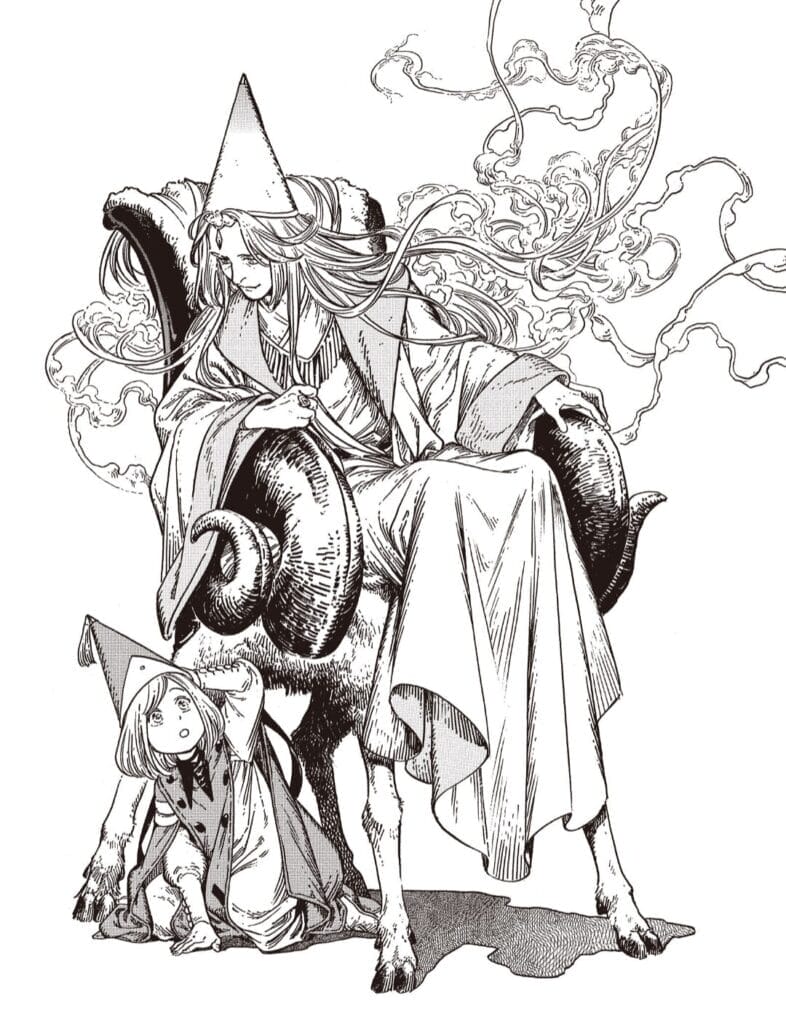
In the meantime, Custas doesn’t have entry to those identical instruments, and his place as a disabled individual in society is far more precarious. In actual life, mobility aids are additionally usually fully priced out for disabled folks. A primary wheelchair prices round £100, however these chairs are often poorly made, liable to interrupt, and might’t deal with even barely uneven floor like drain covers or cracked paving. There are positively chairs which might be higher fitted to this stuff, the know-how is out there! However these chairs can price anyplace from £2,000 to £10,000. An individual could even discover they want totally different aids for various functions. A chair with thick, rugged tires will work nicely off-road, however be troublesome to make use of over carpet. Naturally, an individual who has loads of wealth and energy can afford to have all these instruments at their disposal, however an individual from a decrease financial background finds it far harder to operate in an ableist society, being extra reliant on authorities advantages, and charity. This real-world disparity is mirrored within the distinction between Custas and Beldaruit. It’s not that Beldaruit as a chair person is from a much less ableist society, however moderately that his skill to make use of magic, his monetary property, and social affect means that he’s confronted with fewer limitations.
Even Custas’ primary chair is so costly that he’s attacked by bandits to allow them to steal it. Even when Coco and Tartah make him a brand new mobility support that actually permits him to fly, he undergoes much more struggling when thieves kill his surrogate father in an try and take it from him. Equally, while Beldaruit was capable of proceed to pursue his chosen career along with his incapacity, as a dancer, Custas should start every thing once more from scratch. That is an expertise many newly disabled folks have, myself included. It’s extremely irritating having to think about new methods to adapt to your incapacity, with it usually feeling like a incapacity is taking issues away from you moderately than offering you with a brand new, totally different life. The continuing cycle of rage and sorrow and pleasure for the brand new is completely encapsulated in Shirahama’s work.
It’s no marvel then, that when a Brimmed Cap seems and guarantees to graft aids instantly onto Custas’ physique to make it simpler for him to maneuver about, and in addition to avoid wasting Dagda’s life, Custas accepts the supply. With the Brimmed Caps, Custas sees an opportunity to lastly pull himself and his household out of poverty, and acquire the identical respect on the earth that people present to the Pointed Caps.

A typical ableist trope in media is when a disabled individual turns into an antagonist as a result of, for instance, they might moderately commit mass homicide with the intention to flip right into a Pokémon, than be disabled. Witch Hat toes the road with this trope, with many characters having their villain origins tales stemming from incapacity and persistent sickness. The place the collection differs, although, is that it isn’t self hate that motivates these folks, however moderately a hatred for the society they stay in that withholds support and data that may very well be used to assist them. Whereas he aligns with the collection’ antagonists, Custas is a deeply sympathetic character. His still-ongoing arc highlights the disparities and injustices within the setting whereas nonetheless treating him with empathy and as a personality in his personal proper. Most disabled folks in actual life would additionally agree that having to cope with the Incapacity Advantages System is their very own private villain origin story. In the event you hear of any grizzly authorities murders in London, know that it has completely nothing to do with my upcoming advantages evaluation.
Whereas Custas’ scenario reveals how wealth and sophistication impacts entry to healthcare, Witch Hat additionally explores how different social components comparable to sexuality play a job too. Within the Witch Hat universe, the draconian legal guidelines are upheld by The Knights Moralis. Galga is a member of this magical police drive, and shares their “reminiscence wipe first, ask questions by no means” perspective. He’s additionally in a relationship with one other man, Atwert. When he has his personal reminiscence wiped by a Brimmed Cap, he’s discovered by his boyfriend however has completely no reminiscence of his life earlier than that second. When he’s taken to the Knights Camp for therapeutic, they inform Atwert that they can’t return his beloved’s reminiscence due to The Ideas.

Moreover, as a result of these with their reminiscence wiped are solely allowed to be handed on to apprentices, masters, or members of the family, Atwert is forbidden from having any say in his beloved’s healthcare plan. This, sadly, rings true to the actual world, the place many queer folks have been barred from even visiting their companions in hospital. That is one other space the place social scenario and innate prejudice is constructed instantly into the setting’s healthcare system, which means marginalised persons are lower off from the identical entry afforded to others. Galga’s place as a member of the Knights Moralis additionally reveals how a place of social energy—working to uphold the system—doesn’t essentially defend you from the unfavorable impacts of being marginalised in different methods.
Since Japan doesn’t as of writing have nation-wide equal marriage rights, a manner folks have discovered round this dilemma is thru grownup adoption, and that is the authorized technique that Atwert makes use of in the long run with the intention to hold Galga by his facet. He does this with Galga’s permission, in fact, nevertheless it does replicate that it doesn’t matter what quantity of energy you’ve gotten in society—social and sophistication disparity performs an essential impression on folks’s entry to healthcare.

These are just some examples, and there are various extra that may very well be mentioned: Qifrey’s trauma and gradual lack of eyesight, the best way Richeh’s backstory may resonate strongly with the experiences of neurodivergent college students in real-world college methods, and the numerous minor characters and small moments that present how ableism, class, and magic intersect on this world. From the attitude of incapacity illustration, Witch Hat Atelier is a glittering treasure amongst fantasy tales. While many different latest collection like My Hero Academia and Beastars selected to make use of obscure metaphors to parallel actual world points, Shirahama tackles them head on. She explicitly talks about incapacity discrimination and makes her queer parallels as express as she will inside her setting, drawing on the social mannequin of incapacity to create a sensible and layered world that not solely consists of disabled characters however sympathetically reveals the issues they may face relying on their background.
Her work doesn’t simply have a look at issues from one angle, however the a number of complicated issues at play with how discrimination works. She examines how an individual can have one type of privilege and never one other, and the best way through which an individual can go from a place of energy to certainly one of vulnerability in only one dangerous day. Whereas some fantasy followers declare that disabled folks can not probably exist in a magical society, Shirahama not solely says that they can and do exist, but in addition that their tales are worthy of being advised with nuance. That is the true magic of Witch Hat Atelier.

